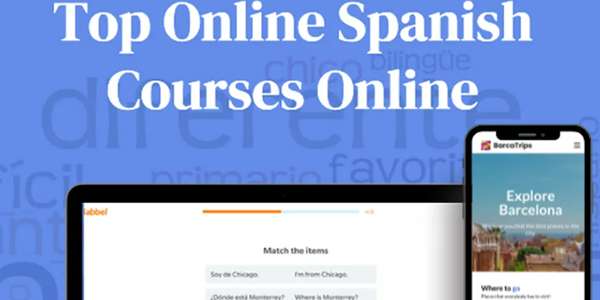
As its influence grows in international business, culture, and travel, learning Spanish offers countless opportunities for personal and professional advancement. This article aims to compare these platforms based on course offerings, payment rates, learning modes, and target audiences, enabling readers to make informed choices that align with their learning preferences and goals.
Learning Spanish has opened doors for me in travel, work, and connecting with people across cultures. With so many platforms out there, I’ve learned the hard way that choosing the right one early saves time, money, and frustration.
Below I break down how the most popular options - Duolingo, Rosetta Stone, Babbel, FluentU, and Busuu - stack up in terms of course design, pricing, learning modes, and who they’re best for.
How I Evaluate These Platforms
Before diving into specifics, here’s what I care about when choosing a Spanish course:
Cost transparency: Can I realistically afford it without hidden fees?
Structure and depth: Does it take me beyond basic phrases into functional language skills?
Real-world practice: Are there chances to speak, listen, and use Spanish outside exercises?
Learning style fit: Is the approach gamified, immersive, or conversation-focused, and does it match my preferences?
Best Spanish Learning Platforms Compared
Duolingo : Best Starter & Habit Builder
I started with Duolingo because it’s free and low-commitment, and it really pulls you into a daily practice habit with gamified lessons, streaks, and bite-sized drills that are easy to fit into a busy day.
Lessons focus primarily on vocabulary and basic grammar through translation and repetition, which makes the early stages fun and motivating for total beginners.
Around ~130 million monthly active users and ~10.9 million paying subscribers reflect its global reach.
Free tier available; Duolingo Plus ~$6.99/month removes ads and adds offline access.
Best for: absolute beginners and habit builders eager to make quick, consistent progress.
Reviews:
Many learners praise Duolingo’s motivation and accessibility, especially for building vocabulary and confidence early on.
Others point out that it doesn’t offer deep grammar explanations or enough real conversational practice, meaning you’ll need supplementary resources to reach fluency. Some advanced learners even find it repetitive or insufficient for more complex language skills.
Duolingo is perfect to start strong and stay consistent, but plan to pair it with more immersive speaking or structured grammar practice as you grow.
Rosetta Stone: Best Immersive Approach
Rosetta Stone has built its reputation on a total immersion method that drops English translations and pushes you to learn through images, sound, and repeated exposure - much like how kids learn their first language.
Many appreciate this pure immersion framework and the TruAccent speech recognition tech for helping them internalize pronunciation and instinctively hear Spanish rather than translate it in their head.
Typical subscription range is about $11.99-$14.99/month with annual plans, bigger deals, or one-time lifetime access options depending on promotions.
Structure leans heavily on picture-word association and spaced repetition to build basic vocabulary and listening skills.
Best for:
beginners who want to strengthen pronunciation and build a language foundation without leaning on English explanations.
Reviews:
Many beginners find the immersion helpful and intuitive for getting comfortable with Spanish sounds and basic structures. However, others note the lessons can feel slow, repetitive, and not sufficiently conversational, especially as you try to use Spanish in real life.
I’d recommend Rosetta Stone if your priority is internalizing pronunciation and foundational vocabulary in an immersive setting - but be prepared to supplement it for real conversational fluency.
Babbel: Best Practical Conversations
Babbel is the platform I personally reach for when my goal is real conversational fluency. It focuses on dialogue you’d actually use - ordering food, asking for directions, talking about your plans - with clear grammar explanations.
Around $14/mo, but long-term plans can drop that to ~$8-$9/mo; lifetime options sometimes available.
Lessons are 10-15 min but teach grammar in context.
Best for: people who want usable Spanish fast.
Babbel is where I noticed the biggest jump from “I know words” to “I can actually speak.” The grammar integration and real scenarios are worth the price if you’re serious about using Spanish outside the app.
FluentU: Best Immersion Through Real Content
FluentU takes a very different route: learning through real videos — like movie trailers, music videos with interactive captions, and quizzes tied to authentic clips. This is powerful for listening and vocabulary in context but not a structured course from A1 to B2 levels.
About $30/month or $240/year (often with a 14-day trial).
Lessons through multimedia, not traditional drills.
Best for: learners who already know basics and want real-world Spanish listening exposure.
I use FluentU as a supplement after I have a foundation. It’s excellent for boosting listening comprehension and seeing Spanish “in the wild,” but I don’t rely on it to teach the basics.
Busuu: Best for Social & Feedback Driven Learners
Busuu stands out because it combines structured lessons with a community of native speakers and feedback loops. You complete exercises and can get real corrections from fluent speakers - something most apps lack.
Free version available; Premium usually ~ $13.95/month with all features.
Offers pronunciation practice, AI vocab review, and community feedback.
Best for: learners who enjoy social learning and want real feedback.
I like Busuu when I want structured lessons plus actual correction from other speakers. If speaking and real-world replies matter most, this should be high on your shortlist.
My Recommendations (Based on Goals)
Choosing the right platform depends on your goals and learning style. Here’s how I would approach it:
Casual beginnings / zero cost, Duolingo
I would start with short daily sessions of 10 to 15 minutes to build a consistent habit. It is better to complete lessons steadily rather than rush through them. I also make use of extra features such as Stories to practice listening in context.
Quick real usage and conversation, Babbel
I focus on lessons built around real-life dialogues. I repeat phrases out loud to internalize them and practice using Spanish in everyday situations like ordering food or asking for directions. This approach helps move from understanding words to actually speaking.
Deep immersion and listening, FluentU
I watch videos actively, pausing and repeating phrases while mimicking pronunciation. I keep track of new words and phrases and pair this with speaking practice to ensure that comprehension turns into usable language.
Speaking practice and feedback, Busuu
I submit exercises to native speakers and carefully review their corrections. Regular interactions with the community build confidence and practical communication skills.
Foundations and pronunciation, Rosetta Stone
I follow the structured lessons to internalize sounds and vocabulary. I combine them with speaking or writing exercises so recognition becomes real-world fluency.
The key is to mix platforms based on your goals, so each session moves you closer to practical Spanish skills without spreading yourself too thin.
Why Learning Spanish Is More Valuable Than Ever
Spanish isn’t just a regional language anymore - it’s one of the most widely spoken languages on the planet. According to the 2025 report from Instituto Cervantes, over 630 million people speak Spanish worldwide, including native speakers, second-language speakers, and learners.
That ranks Spanish as the fourth most spoken language globally, following English, Mandarin Chinese, and Hindi.
This massive reach makes Spanish highly valuable in business, travel, and digital communication. Multinational companies, growing startups, and international organizations increasingly prioritize Spanish skills for global collaboration.
By learning Spanish, you’re opening the door to connect with millions of people, gain a competitive edge in the job market, and navigate cultural experiences with ease.